Sarfaraz Khan Slams 157 Off 75 Balls In Vijay Haza
October 14, 2026

Date: October 12, 2026
Category: Latest News, Indian Politics, Supreme Court
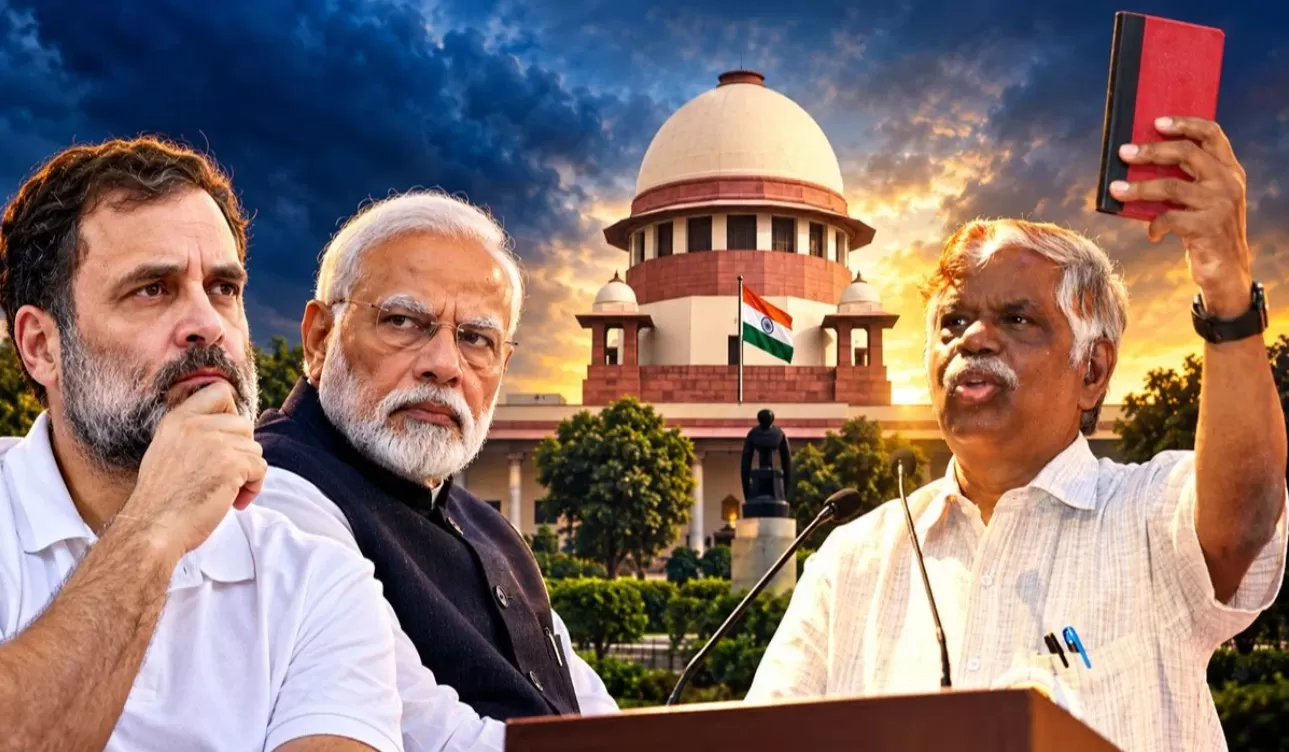
A political controversy has intensified in India after opposition leaders, including Rahul Gandhi, participated in a march to the Supreme Court and filed a petition concerning Chief Election Commissioner Gyanesh Kumar. At the same time, a statement by former Madras High Court judge K. Chandru has sparked debate over the transparency and accountability of the judicial appointments process.
The developments have brought renewed attention to the relationship between constitutional institutions, electoral procedures and the independence of the judiciary.
Leaders of the INDIA opposition alliance participated in a “Chalo Delhi” march from Barakhamba Road to the Supreme Court in New Delhi. The demonstration included Leader of the Opposition in the Lok Sabha Rahul Gandhi, Congress leader Priyanka Gandhi Vadra, Samajwadi Party chief Akhilesh Yadav, RJD leader Tejashwi Yadav and several other opposition leaders.
Telangana Chief Minister Revanth Reddy and Karnataka Deputy Chief Minister D. K. Shivakumar also attended the protest, demonstrating support from leaders beyond the national opposition leadership.
The demonstrators raised concerns about alleged irregularities in the electoral process, including the Special Intensive Revision (SIR) of electoral rolls. They demanded action against Chief Election Commissioner Gyanesh Kumar and called for his resignation.
According to the supplied report, a petition was filed in the Supreme Court with Rahul Gandhi, Mallikarjun Kharge, Trinamool Congress leader Saugata Roy, Akhilesh Yadav and Tejashwi Prasad Yadav among the petitioners.
Rahul Gandhi described the protest as a collective opposition effort directed against the Chief Election Commissioner rather than a series of separate political movements.
Amid the political developments, remarks by former Madras High Court judge K. Chandru attracted attention during a discussion titled “Who Will Judge the Judges” held in Chennai.
Chandru reportedly criticised the collegium system for lacking transparency and questioned how the process of appointing judges could be made more accountable to the public.
He alleged that since the Narendra Modi government came to power in 2014, appointments to the Supreme Court and High Courts have effectively been controlled by Prime Minister Narendra Modi rather than the collegium.
Important clarification: This is an allegation attributed to the former judge in the supplied report, not an established legal finding. The constitutional and legal process for judicial appointments is more complex, and the claim should be assessed against official records and independent reporting.
The collegium system is the mechanism through which senior judges of the Supreme Court and High Courts recommend appointments and transfers within the higher judiciary.
Under the established constitutional framework, judicial appointments involve recommendations by the collegium and formal action by the executive. The system developed through Supreme Court judgments rather than being expressly detailed in the original text of the Constitution.
Critics have argued that the system lacks sufficient transparency, particularly regarding how candidates are assessed and why particular recommendations are accepted or rejected.
Supporters, meanwhile, emphasise that judicial involvement in appointments helps protect the independence of the judiciary from direct political control.
K. Chandru also referred to the National Judicial Appointments Commission (NJAC), which the central government sought to establish to change the process of appointing judges.
The NJAC was introduced through constitutional and legislative changes intended to replace the existing collegium mechanism. However, in 2015, the Supreme Court struck down the constitutional amendment and the related law, holding the proposed arrangement unconstitutional.
According to the supplied report, Chandru argued that the government did not pursue the creation of a new commission after the court's decision because other ways of influencing judicial appointments had become available.
This interpretation remains his reported position and should not be treated as proof that the Prime Minister personally appoints judges.
The Bharatiya Janata Party (BJP) criticised the opposition march, describing it as political drama.
Union Minister and senior BJP leader Shivraj Singh Chouhan accused the Congress of repeatedly attacking constitutional institutions and blaming them for its electoral defeats.
Chouhan referred to election results in several states and local bodies, arguing that the Congress should examine its own leadership and political approach instead of blaming the Election Commission.
He said that the Congress's electoral setbacks were caused by what he described as a lack of ideas and direction within its leadership, rather than by the Election Commission.
The BJP's response reflects the wider political dispute between the ruling party and opposition leaders over electoral processes and the credibility of constitutional institutions.
The opposition's petition and the debate over judicial appointments concern two important aspects of India's democratic framework: confidence in the electoral process and the independence of the judiciary.
The opposition's allegations about electoral procedures and Chandru's criticism of judicial appointments raise questions about institutional accountability. However, political allegations and public statements must be distinguished from findings established by courts or supported by verified official records.
The outcome of the Supreme Court proceedings, along with further discussion of judicial appointment reforms, may shape the debate over transparency and accountability in India's constitutional institutions.
1. Why did Rahul Gandhi and other opposition leaders march to the Supreme Court?
According to the supplied report, opposition leaders protested over alleged electoral irregularities and the Special Intensive Revision (SIR) of electoral rolls, while demanding action against Chief Election Commissioner Gyanesh Kumar.
2. What did former judge K. Chandru allege?
He reportedly alleged that judicial appointments had effectively come under Prime Minister Narendra Modi's control since 2014. This is an attributed allegation, not an established judicial finding.
3. What is the collegium system?
It is the system through which senior judges recommend appointments and transfers to India's higher judiciary.
4. What was the National Judicial Appointments Commission (NJAC)?
The NJAC was a proposed mechanism to reform judicial appointments. The Supreme Court struck it down in 2015, after which the collegium system continued.
5. How did the BJP respond to the opposition march?
BJP leader Shivraj Singh Chouhan criticised the protest and argued that the Congress should take responsibility for its electoral performance.
Conclusion
The opposition march to the Supreme Court and K. Chandru's reported comments have brought electoral accountability and judicial appointments back into the political spotlight. As the debate continues, verified court records, official statements and reliable reporting will be essential to distinguish established facts from political claims.
October 14, 2026

October 14, 2026
October 14, 2026

October 14, 2026
October 14, 2026
October 14, 2026

October 14, 2026

October 14, 2026

October 14, 2026

October 14, 2026
No comments yet. Be the first to comment.